Why Brand Inheritance Can Break Your Legacy—And How to Protect It
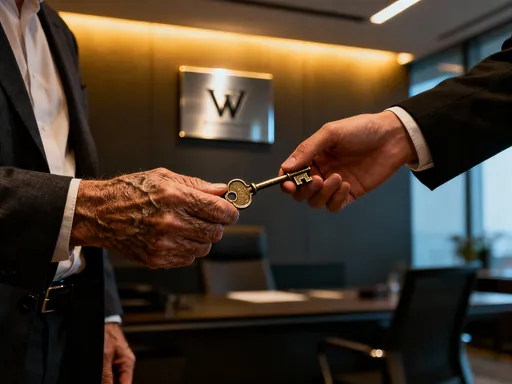
You spend decades building a brand that stands for quality, trust, and hard work—only to realize too late that it might not survive you. I’ve seen family legacies crumble not from market shifts, but from silent financial pitfalls no one prepared for. Brand inheritance isn’t just about passing down a name—it’s about protecting value, identity, and future income. Without the right financial skills, even the strongest brand can fade in a generation. The emotional weight of a family name often overshadows the practical realities of business continuity, leaving heirs unprepared, underequipped, and overwhelmed. This is not just a story of lost profits—it’s a story of lost purpose. But with foresight, structure, and discipline, a brand can become more than a memory. It can become a lasting legacy.
The Hidden Cost of a Name: What Brand Inheritance Really Means
A brand is not simply a logo on a storefront or a name stitched onto a product tag. It is the accumulated trust of customers, the reputation built through consistent performance, and the emotional connection forged over years of reliable service. When a business owner considers brand inheritance, they are not merely transferring ownership—they are passing along an intangible yet highly valuable financial asset. This asset, often referred to as brand equity, represents the premium customers are willing to pay for a recognized and trusted name. Studies have shown that strong brand equity can account for up to 30% of a company’s market value, depending on the industry. Yet, many family-owned businesses fail to recognize this value until it is too late.
The misconception that a brand will naturally endure after the founder’s departure is one of the most costly assumptions in business succession. Unlike physical assets such as real estate or equipment, a brand does not retain its value automatically. Its worth depends on continuous investment, strategic direction, and public perception. Without deliberate planning, the brand can erode quickly—sometimes within a single generation. This erosion often begins subtly: inconsistent messaging, declining customer service, or a failure to adapt to changing markets. Over time, these small missteps compound into a loss of relevance and, ultimately, a collapse in value.
Treating brand inheritance as a sentimental gesture rather than a financial transaction sets the stage for instability. When no formal valuation is conducted, no legal structure is established, and no succession plan is in place, confusion arises among heirs. Disputes over control, unclear roles, and divergent visions for the business can paralyze decision-making. In some cases, family members may attempt to sell the brand, only to discover that its market value has diminished due to years of neglect. In others, well-meaning heirs may try to maintain operations without understanding the financial mechanisms needed to sustain growth. The result is often the same: a once-thriving brand fades into obscurity, not because the market rejected it, but because the transition was mishandled.
To avoid this fate, owners must reframe how they view their brand. It is not a keepsake to be handed down like a piece of jewelry—it is a dynamic asset that requires stewardship. Just as a retirement portfolio needs rebalancing, a brand needs ongoing management to preserve its worth. This means integrating brand value into estate planning, ensuring that heirs understand both the emotional and economic dimensions of what they are inheriting. Only then can the legacy endure beyond the founder’s lifetime.
The Top Pitfall: Treating the Brand Like a Family Heirloom
One of the most common and damaging mistakes in brand inheritance is allowing emotional attachment to override sound business judgment. The desire to keep the business “in the family” often leads owners to appoint a successor based on lineage rather than capability. While this intention comes from a place of loyalty and tradition, it can have serious financial consequences. Leadership roles in a growing or evolving business require specific skills—strategic thinking, financial literacy, and the ability to adapt to market changes. When these qualifications are overlooked in favor of familial ties, the brand becomes vulnerable to mismanagement.
Consider the case of a regional food manufacturer whose founder passed control to his eldest son, assuming that blood relation equated to readiness. The son, while dedicated, had spent most of his career in sales and lacked experience in supply chain management, regulatory compliance, and digital marketing. Within three years, the company failed to meet new labeling requirements, lost key retail partnerships, and saw a 40% drop in online visibility. Customer trust declined, and competitors quickly filled the gap. By the time the family sought outside expertise, the brand’s market position had weakened beyond easy recovery. This scenario is not unique—it reflects a pattern seen across industries, from construction firms to retail chains.
The danger lies in conflating ownership with leadership. A family member can own shares in a business without necessarily being the best person to run it. Blurring these roles creates governance gaps that undermine accountability. Without clear performance metrics, regular reviews, or an independent board, there is little mechanism to correct course when problems arise. Additionally, other family members who feel excluded may become resentful, leading to internal conflict that further destabilizes operations. In some cases, disputes escalate to legal battles, resulting in costly litigation and public damage to the brand’s image.
To prevent this, owners must separate sentiment from strategy. This begins with an honest assessment of potential successors’ skills and a commitment to developing those who show promise. It also means being open to the possibility that the most qualified leader may not be a family member. Establishing a governance framework—such as a family council or advisory board—can provide structure and reduce the risk of emotional decision-making. By treating leadership succession as a professional process, not a familial obligation, owners protect both the business and the relationships that matter most.
Valuation Blind Spots: Why You Can’t Guess Your Brand’s Worth
Many business owners operate under the assumption that the value of their brand is self-evident—often equating it with annual revenue or the size of their customer base. However, this intuitive approach can lead to significant financial missteps, especially during inheritance. Brand valuation is a complex process that considers multiple factors, including profitability, market share, customer loyalty, and competitive positioning. Relying on guesswork rather than professional appraisal can result in tax liabilities, disputes among heirs, and difficulties securing financing for the next generation.
One common error is using top-line revenue as a proxy for brand value. A business may generate substantial sales, but if margins are thin or costs are rising, the underlying profitability—and thus the brand’s sustainable value—may be much lower. Another mistake is ignoring market comparables. A brand’s worth is ultimately determined by what a willing buyer would pay in an open market. Without benchmarking against similar businesses that have recently changed hands, owners risk overestimating or underestimating their brand’s true market value.
The consequences of inaccurate valuation can be severe. For example, if a brand is undervalued in an estate plan, heirs may face unexpected tax bills when the business is appraised by authorities. Conversely, if the valuation is inflated, it may become impossible to secure loans or attract investors, as lenders base funding decisions on realistic asset values. In one documented case, a family bakery with a loyal following was passed to two siblings without a formal valuation. When they attempted to expand, banks rejected their loan applications, citing insufficient collateral. A later appraisal revealed that while the brand had strong local recognition, its lack of documented trademarks and standardized operating procedures limited its financial worth.
To avoid these pitfalls, owners should engage independent valuation experts who specialize in intangible assets. These professionals use established methodologies—such as the relief-from-royalty method or excess earnings approach—to arrive at a defensible estimate of brand value. This figure can then be integrated into estate planning, ensuring that tax obligations are accurate and that heirs have a clear understanding of what they are inheriting. Additionally, a formal valuation creates a baseline for future growth, allowing the next generation to measure progress and make informed decisions.
Legal Gaps That Drain Value: Structure Before You Pass It On
Even with a well-drafted will, brand assets can become entangled in probate, exposed to unnecessary taxes, or contested by heirs. Without proper legal structuring, the transfer of a brand can trigger financial drains that erode its value before the next generation ever takes control. The goal of legal planning in brand inheritance is not just to transfer ownership, but to preserve value, ensure continuity, and minimize disruption. This requires moving beyond basic estate documents and implementing strategic frameworks designed to protect business interests.
One of the most effective tools is the use of a trust. A properly structured trust can hold ownership of the brand and related intellectual property, allowing for a smooth transition without court involvement. Unlike a will, which becomes public record and is subject to probate delays, a trust operates privately and can specify detailed instructions for management and distribution. For example, a trust can stipulate that dividends from the business be distributed to heirs while retaining ownership within the trust until successors are ready to assume control. This prevents fragmentation of ownership and maintains strategic coherence.
Another key strategy is the creation of a holding company. By placing the brand, trademarks, and other valuable assets under a separate legal entity, owners can isolate personal estate matters from business operations. This separation protects the brand from personal liabilities and simplifies the transfer process. It also allows for more flexible tax planning, as income generated by the brand can be managed independently of the founder’s personal finances. In some cases, licensing agreements can be established between the holding company and the operating business, creating a steady revenue stream that supports both the estate and future growth initiatives.
Additionally, clear shareholder agreements and buy-sell arrangements should be in place before any transition occurs. These documents define how ownership interests can be transferred, what happens if a co-owner dies or becomes incapacitated, and how disputes will be resolved. Without them, disagreements among heirs can lead to forced sales, devaluation, or even the dissolution of the business. By addressing these issues proactively, owners ensure that their brand is not only passed on, but protected from the legal and financial pitfalls that often accompany inheritance.
Succession Without Strategy: When “Keeping It in the Family” Fails
Delaying succession planning is one of the greatest risks to brand continuity. Many founders postpone the conversation, believing they will “know when the time is right” or that their children will naturally step into leadership roles. However, without a structured transition plan, even the most capable heirs can struggle. Leadership is not inherited—it must be developed. Expecting someone to take over a complex business overnight, without training or gradual involvement, sets them up for failure.
Effective succession is not a single event, but a multi-year process. It begins with identifying potential successors early and exposing them to different aspects of the business. This includes not only operational responsibilities but also financial management, customer relations, and strategic planning. A phased approach—where heirs take on increasing levels of responsibility over time—allows them to build confidence, learn from mistakes, and develop a deep understanding of the brand’s values and operations.
Mentorship plays a crucial role in this process. Founders who actively coach their successors, provide constructive feedback, and encourage independent decision-making help bridge the gap between ownership and leadership. At the same time, it is important to establish objective performance benchmarks. These may include profitability targets, customer satisfaction scores, or digital engagement metrics. By measuring progress against clear standards, families can ensure that emotional bias does not override accountability.
Another critical component is the inclusion of external oversight. An independent board of advisors or directors can offer objective guidance, challenge assumptions, and ensure that decisions are made in the best interest of the business, not just the family. This governance structure provides a check on potential overreach and helps maintain professional standards. In cases where multiple heirs are involved, a board can also mediate disagreements and maintain focus on long-term goals. Without such safeguards, even well-intentioned successors may make decisions that compromise the brand’s integrity or financial health.
Market Shifts Don’t Wait: Building Resilience Into the Brand
A brand that does not evolve risks becoming irrelevant. Consumer preferences change, technology advances, and new competitors emerge. The next generation inherits not just a name, but the responsibility to keep the business competitive. Unfortunately, many family-owned brands enter transition periods already behind the curve—relying on outdated systems, limited digital presence, or narrow customer bases. To ensure longevity, resilience must be built into the brand’s foundation before the handover occurs.
Digital transformation is no longer optional. Customers expect seamless online experiences, from e-commerce platforms to social media engagement. Brands that lack a strong digital footprint find it increasingly difficult to attract younger demographics or scale beyond local markets. Investing in a professional website, search engine optimization, and data-driven marketing strategies is essential. These tools not only expand reach but also provide valuable insights into customer behavior, enabling more informed decision-making.
Equally important is the development of scalable systems. Many small and mid-sized businesses operate on informal processes that depend heavily on the founder’s personal involvement. When that founder steps away, the lack of standardized procedures can bring operations to a halt. Documenting workflows, implementing customer relationship management (CRM) software, and establishing training protocols ensure that the business can function smoothly regardless of leadership changes. These systems also make the brand more attractive to potential partners, investors, or acquirers, should the family choose to explore external opportunities.
Finally, fostering a culture of innovation ensures that the brand remains responsive to change. This means encouraging experimentation, listening to customer feedback, and being willing to adapt products or services as needed. Founders can model this mindset by introducing new initiatives before they retire, demonstrating that evolution is part of stewardship. When the next generation takes over, they inherit not just a legacy, but a living, adaptable business capable of thriving in an ever-changing marketplace.
The Financial Skills That Keep a Legacy Alive
Protecting a brand through inheritance requires more than love and loyalty—it demands financial literacy. The most enduring legacies are built on a foundation of discipline, foresight, and strategic planning. Founders who equip their heirs with the right financial skills give them the tools to preserve and grow the brand, rather than merely maintain it. These skills include understanding brand valuation, navigating tax implications, managing cash flow, and making informed investment decisions.
Tax planning is particularly critical. Inheritance taxes, capital gains, and estate duties can significantly reduce the value transferred to heirs if not properly managed. Strategies such as gifting shares over time, utilizing tax-exempt trusts, or restructuring ownership before retirement can minimize liabilities and ensure that more of the brand’s value is preserved. Financial education should also cover budgeting, financial reporting, and risk management—skills that enable successors to run the business with confidence and transparency.
Equally important is the ability to interpret financial data. A successor who understands profit margins, return on investment, and customer acquisition costs can make strategic decisions that support sustainable growth. They can identify inefficiencies, allocate resources effectively, and pursue opportunities that align with the brand’s long-term vision. This level of financial competence prevents reactive decision-making and reduces the risk of costly mistakes.
Ultimately, brand inheritance is not about resisting change, but about guiding it. The founder’s role is not to dictate every future move, but to create a structure that allows the brand to adapt while staying true to its core values. This means combining emotional legacy with financial rigor—honoring the past while preparing for the future. With the right planning, a brand can outlive its creator, continuing to serve customers, support families, and stand as a testament to what thoughtful stewardship can achieve.