Chasing Light and Cobblestones: Rothenburg’s Most Magical Photo Spots
Rothenburg, Germany feels like stepping into a storybook—half-timbered houses, winding alleys, and golden light spilling over ancient walls. As a photographer, I was blown away by how every corner seemed crafted for the perfect shot. From sunrise over the town gates to quiet moments in hidden courtyards, Rothenburg offers scenery that’s both timeless and deeply personal. This is more than just a pretty town—it’s a living canvas waiting to be captured. With its meticulously preserved medieval charm, Rothenburg invites travelers to slow down, observe, and frame not only what they see, but how they feel. For women who cherish meaningful journeys—those rich with beauty, stillness, and authenticity—this town offers a rare gift: a place where memories are made visible through the lens.
The Timeless Charm of Rothenburg’s Old Town
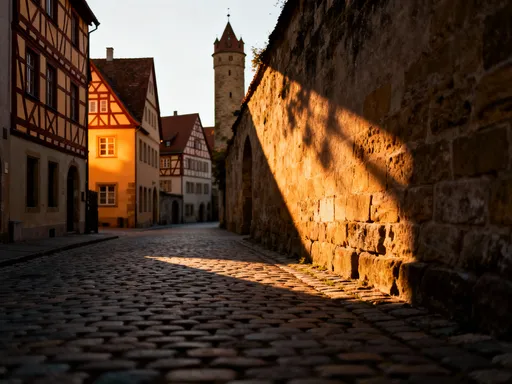
At the heart of Bavaria’s Romantic Road, Rothenburg ob der Tauber stands as one of Europe’s best-preserved medieval towns. Its old town is a treasure trove of architectural harmony, where crooked half-timbered homes lean gently toward one another, their colorful shutters and flower boxes glowing under soft sunlight. The absence of cars in the historic center enhances the sense of stepping into another era, allowing photographers to capture candid scenes without modern distractions. Cobblestone streets wind organically, creating natural leading lines that guide the eye—and the camera—through intimate compositions.
The market square, or Marktplatz, serves as the town’s vibrant core, anchored by the grand Town Hall and surrounded by cafes with striped awnings. Early morning light bathes the square in a warm, golden hue, ideal for photographing the interplay between shadow and stone. As the day progresses, sunlight shifts across the facades, highlighting intricate carvings and weathered wood textures. Late afternoon brings longer shadows that add depth and drama, especially when framing the arcaded walkways that line parts of the square.
Seasonal changes further enrich the visual narrative. In spring, window boxes burst with petunias and geraniums, while autumn casts a honeyed glow over the rooftops. Winter transforms the town into a snow-dusted dream, with frost clinging to eaves and smoke curling from chimneys. For photographers, these transitions offer endless opportunities to capture Rothenburg not as a static postcard, but as a living, breathing place shaped by time and light. Walking the streets with intention—pausing to observe details rather than rushing from landmark to landmark—reveals the quiet poetry of daily life in this enchanted town.
Golden Hour at the Town Gates: Plönlein at Its Finest
No image of Rothenburg is more iconic than the view of Plönlein, where the pointed spire of St. Jakob’s Church rises between two sloping red roofs, framing the small triangular square beneath. This postcard-perfect scene, located near the Kobolzeller Tor gate, is often crowded during midday. But those willing to rise early or linger after sunset are rewarded with something far more powerful: light that transforms the ordinary into the magical.
During golden hour—the hour after sunrise and before sunset—the sun skims low across the horizon, casting a warm, amber glow across the cobblestones. The light softens edges, wraps around architectural details, and creates gentle reflections that ripple across wet stones after a light rain. At this time, shadows stretch long and lean, adding dimension and mood to photographs. The bell tower, often shrouded in mist during early morning, emerges like a silhouette against a pastel sky, evoking a sense of quiet reverence.
To capture the most authentic version of this scene, arrive at least 30 minutes before sunrise. Bring a tripod for stability, especially if shooting in low light, and use a polarizing filter to enhance sky contrast and reduce glare on wet surfaces. Position yourself slightly to the side of the central path to avoid symmetry fatigue and include subtle foreground elements—perhaps a lone bicycle leaning against a wall or a cat darting between archways—to add narrative depth. While the view is undeniably picturesque, the true magic lies in patience: waiting for the right light, the right moment, the right stillness that makes the image feel not just seen, but felt.
Walking the Walls: Elevated Perspectives and Panoramic Frames
One of Rothenburg’s greatest photographic advantages is its nearly intact 1.5-kilometer ring of medieval fortifications. The elevated wall walk offers a unique vantage point, allowing photographers to see the town not just at street level, but from above—where rooftops unfold like a patchwork quilt and distant hills roll into the horizon. This aerial perspective transforms familiar scenes into abstract compositions of color, texture, and form.
Begin at the Spital Bastion, where the path opens with a sweeping view of the town’s eastern edge. Here, the archways of the wall itself become natural frames, drawing the eye toward clusters of chimneys and sunlit gables. Use a telephoto lens to compress the layers of rooftops, creating a sense of density and rhythm. As you walk westward toward the Kobolzeller Tor, notice how the changing angle reveals new details—ivy creeping along stone, laundry fluttering between windows, a bird taking flight from a weather vane.
Mid-morning and late afternoon are ideal for wall-top photography, when the sun is high enough to illuminate the interiors of courtyards but low enough to cast interesting shadows across the battlements. A wide-angle lens is particularly effective for capturing the depth of the fortifications and the contrast between the sturdy stone and the soft sky beyond. For those interested in storytelling, include human elements: a child peering over the ramparts, a couple pausing to take in the view, or a local gardener tending to flowers in a rooftop planter. These moments ground the grandeur of the landscape in everyday life, reminding us that Rothenburg is not a museum, but a home.
Hidden Courtyards and Quiet Alleys: Off-the-Beaten-Path Magic
Beyond the main squares and tourist trails, Rothenburg reveals its most intimate secrets in quiet corners—narrow lanes so tight two people must turn sideways to pass, unmarked wooden doors leading to sunlit courtyards, and staircases that spiral up into silence. These hidden spaces, often overlooked by guidebooks, offer some of the most emotionally resonant photo opportunities in the town.
Wander without a map through the network of alleys branching off from the main thoroughfares. Let curiosity guide you. You might stumble upon a courtyard where climbing roses spill over a stone well, or a tucked-away chapel with a bronze door worn smooth by centuries of hands. These moments thrive on texture: the grain of aged wood, the coolness of shadowed stone, the delicate lace of morning light filtering through a canopy of leaves. A macro lens can reveal the poetry in small details—a rusted keyhole, a chipped paint edge, a single dewdrop clinging to a spiderweb.
Photographing these spaces requires sensitivity and respect. Many of these courtyards are private residences, so always ask before entering or taking pictures of interiors. The best approach is to observe quietly, waiting for the right moment when light and stillness align. A single shaft of sunlight across a cobblestone floor, a cat stretching in a sunlit doorway, or the faint echo of a door closing—these are the fleeting, unrepeatable moments that define meaningful travel photography. By slowing down and embracing serendipity, photographers can capture not just places, but feelings: solitude, nostalgia, peace.
Seasonal Shifts: How Winter and Spring Redefine the Scenery
Rothenburg’s magic is not confined to a single season. Each time of year paints the town in a different emotional palette, offering photographers fresh perspectives and distinct atmospheres. Winter, particularly during the annual Christmas market, transforms Rothenburg into a real-life winter wonderland. The Reiterlesmarkt, one of Germany’s oldest and most beloved Christmas festivals, fills the market square with wooden stalls, glowing lanterns, and the scent of mulled wine and roasted nuts. Snow-covered rooftops glisten under strings of warm lights, and the air carries a hush that makes every footstep on frozen cobblestones sound like a whisper.
Photographing during this season requires preparation—dress warmly, protect your camera from moisture, and embrace the low light. Use a higher ISO setting to capture the ambient glow of lanterns and window lights without a flash, which can disrupt the mood. Focus on contrasts: the warmth of a steaming mug against cold stone, a child’s rosy cheeks beside a snowman, or the intricate wooden carvings of nativity scenes lit from within. The festive decorations—wreaths, ornaments, handcrafted toys—add layers of cultural storytelling to your images.
In contrast, spring brings a delicate renewal. Wisteria drapes over archways in cascades of purple, cherry blossoms float like pink snow in the breeze, and window boxes overflow with bright tulips and daffodils. The light is softer, the air fresher, and the town feels alive with possibility. Early morning fog often lingers in the valleys, creating ethereal scenes where rooftops seem to float above the mist. This is the season for gentle, hopeful compositions—children chasing bubbles in the square, a gardener pruning roses, or a couple sharing coffee at an outdoor table beneath a flowering tree. By visiting in different seasons, photographers can tell a fuller story of Rothenburg—one that moves beyond beauty to capture the rhythm of life in this timeless place.
Capturing Daily Life: Markets, Cafés, and Local Color
While architecture and landscapes dominate many travel photos, the soul of Rothenburg lives in its people and daily rituals. Photographing local life requires a thoughtful, respectful approach—especially for women travelers who may naturally connect with the quieter rhythms of community. The town’s small bakeries, family-run shops, and neighborhood cafes offer intimate glimpses into the fabric of everyday existence.
Visit the weekly farmers market, where vendors sell fresh bread, local cheeses, and seasonal produce. The baker at Bäckerei Handwerksbetrieb pulls golden pretzels from a wood-fired oven, their crusts crackling as they cool. A flower seller arranges bouquets with careful hands, while an elderly couple haggles gently over the price of honey. These moments are not staged; they are lived. To photograph them ethically, always ask for permission with a smile and a simple "Darf ich ein Foto machen?" (May I take a photo?). Most locals are welcoming, especially when approached with kindness and curiosity.
Cafés along the Hauptstraße offer another window into local culture. Sit at an outdoor table with a cup of coffee and observe. A woman reads a newspaper in the sun, a man repairs a clock in his tiny shop, a dog naps beside its owner on a bench. These small, unguarded moments—when people are absorbed in their routines—carry deep emotional weight. Use a 50mm lens for natural perspective, and avoid using flash, which can feel intrusive. Instead, rely on available light and wait for the decisive moment when gesture, expression, and environment align. A single image of a wrinkled hand holding a teacup can speak volumes about time, tradition, and belonging.
From Snapshots to Stories: Composing Meaningful Travel Photos
Every photograph is a choice—a decision about what to include, what to exclude, and how to see. In a place as visually rich as Rothenburg, it’s easy to fall into the trap of taking postcard shots: pretty, predictable, and forgettable. The deeper challenge—and the greater reward—is to create images that carry emotion, memory, and meaning. This shift from snapshot to story begins with intention.
Start by slowing down. Instead of photographing ten scenes in an hour, spend twenty minutes with one. Study the light. Notice the textures. Wait for the moment when a bird lands on a windowsill, when a shadow crosses a wall, when a child laughs and throws her head back. These are the moments that make a photo feel alive. Use composition techniques like leading lines—cobblestone paths, arched doorways, staircases—to draw the viewer into the image. Play with symmetry, but don’t be afraid to break it for emotional effect.
Consider the role of color and mood. A rainy afternoon, often dismissed as bad weather, can yield some of the most atmospheric images—reflections in puddles, people under umbrellas, the warm glow of shop windows against gray stone. Embrace imperfection. A slightly blurred motion shot of a passing cyclist, a door left ajar, a forgotten umbrella—these details add authenticity and narrative depth. Above all, remember that the most powerful travel photos are not just of a place, but of a feeling: the hush of an empty alley at dawn, the warmth of shared laughter in a café, the quiet awe of standing beneath a centuries-old tower.
Why Rothenburg Stays in Your Lens—and Your Heart
Rothenburg ob der Tauber is more than a destination; it is an experience of time slowed, beauty noticed, and wonder rekindled. For women who seek travel that nourishes the spirit as much as the eye, this town offers a rare sanctuary—a place where history feels close, light feels golden, and every turn reveals a moment worth preserving. The photographs taken here are not merely souvenirs; they are echoes of a deeper connection, reminders of what it feels like to be fully present.
What makes Rothenburg truly unforgettable is not just its perfect facades or fairy-tale charm, but its ability to make the past feel immediate. Walking its streets, one doesn’t just see history—one walks within it, breathes it, photographs it. And in doing so, creates not just images, but memories that endure. Whether captured at sunrise on the walls, in the laughter of a market vendor, or in the quiet of a hidden courtyard, these moments form a visual diary of stillness, grace, and discovery.
So return with your camera, but also with your heart open. Let Rothenburg teach you to see differently—to notice the small, the quiet, the fleeting. Let it remind you that beauty is not always loud, and that the most powerful stories are often the quietest ones. In the end, the best photographs are not those that look perfect, but those that make you feel something. And in Rothenburg, that feeling—of wonder, of peace, of time standing still—is always within reach.