You Won’t Believe What Atlanta’s Skyline Hides
Atlanta isn’t just a Southern hub with great food and history—it’s a city that surprises you architecturally. I didn’t expect to be wowed by skyscrapers, old courthouses, or hidden modernist gems, but everywhere I turned, the buildings told a story. From glass towers piercing the sky to red-brick warehouses turned chic lofts, Atlanta’s architectural blend of old and new is absolutely stunning. This is more than a city—it’s a living design journal waiting to be explored. What makes Atlanta truly unique is how its built environment captures layers of history, innovation, and cultural transformation. It’s a city where the past isn’t erased but reimagined, where sustainability meets Southern charm, and where every neighborhood offers a new architectural chapter.
First Impressions: The Skyline That Defies Expectations
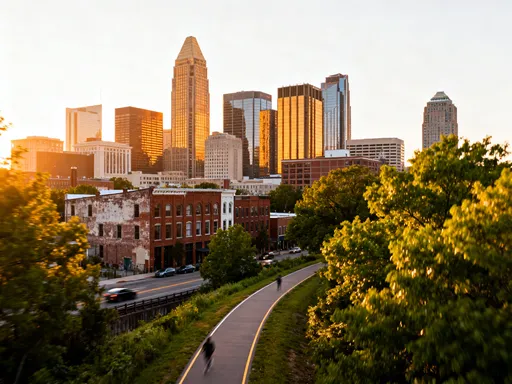
Arriving in Atlanta by car or plane, the first thing that strikes most visitors is the skyline—a forest of glass and steel rising above a lush canopy of trees. Unlike other major U.S. cities that sprawl endlessly, Atlanta’s urban core is concentrated, making its verticality even more striking. The downtown skyline is anchored by towering structures like the Bank of America Plaza, which at 1,023 feet stands as the tallest building in the Southeast. Its sleek, tapered design, capped with a glowing crown at night, gives the city a modern silhouette. Nearby, One Atlantic Center—designed by renowned architect Philip Johnson—adds a postmodern edge with its stepped crown and reflective façade. These skyscrapers symbolize Atlanta’s emergence as a 20th-century economic powerhouse, particularly in finance, telecommunications, and logistics.
Yet what’s most compelling about Atlanta’s skyline is not just its height, but its contrast. Amid the glass towers, low-rise historic buildings hold their ground, creating a visual dialogue between eras. You can see 19th-century brick warehouses nestled beside 21st-century high-rises, a testament to the city’s layered development. This juxtaposition reflects Atlanta’s identity as both a forward-looking metropolis and a city deeply rooted in Southern history. The skyline doesn’t dominate the landscape; instead, it emerges from it—literally. Atlanta is famously known as “The City in a Forest,” a nickname earned from its dense tree cover, with over 47% of the city blanketed in greenery. This blend of urban density and natural abundance creates a unique aesthetic where steel and foliage coexist in harmony.
The city’s growth pattern has also shaped its architectural profile. Unlike cities built on flat plains, Atlanta’s topography is hilly, which influences how buildings are positioned and how streets flow. This terrain contributes to unexpected vantage points—driving along Peachtree Street, for instance, offers shifting perspectives of the skyline as it appears and disappears behind tree lines and slopes. The skyline isn’t static; it unfolds dynamically, rewarding attentive observation. This organic interplay between nature and construction underscores Atlanta’s architectural character: it’s not just about building upward, but about integrating with the land.
Downtown’s Historic Core: Where Brick and Stone Tell Stories
At the heart of Atlanta lies Five Points, often considered the city’s birthplace. This bustling intersection is surrounded by some of the oldest surviving commercial buildings in the city, many dating back to the late 1800s. Walking through this district feels like stepping into a different era, where cast-iron columns, arched windows, and intricate brickwork speak of a time when craftsmanship defined urban architecture. These structures were originally built as banks, department stores, and municipal offices, serving a rapidly growing post-Civil War city. Today, many have been adaptively reused—former bank vaults now house coffee shops, and old office lobbies have become art galleries or boutique workspaces.
Architectural styles in downtown Atlanta reflect a rich historical tapestry. Romanesque Revival buildings, characterized by heavy stonework, rounded arches, and fortress-like appearances, can be seen in former civic buildings. The Old City Hall, completed in 1882, is a prime example, with its rusticated granite façade and central clock tower evoking a sense of permanence and authority. Neoclassical influences are also evident, particularly in the design of former financial institutions. These buildings feature symmetrical façades, grand columns, and pediments reminiscent of ancient Greek and Roman temples, symbolizing stability and trust—qualities essential to banking in the early 20th century.
One of the most iconic examples of historic architecture in Atlanta is the Georgia State Capitol, a Renaissance Revival masterpiece completed in 1889. Its dome, modeled after St. Peter’s Basilica in Rome, is covered in Georgia marble and topped with a bronze statue of Miss Freedom. Inside, the building retains much of its original woodwork, marble floors, and stained-glass skylight. The Capitol isn’t just a government building; it’s a monument to the state’s identity and a carefully preserved link to the past. What makes these historic structures remarkable is not only their design but their continued relevance. Through thoughtful restoration and adaptive reuse, they remain functional parts of daily life, housing offices, cultural spaces, and public services.
This preservation effort reflects a broader commitment to honoring Atlanta’s architectural heritage. While some cities tear down old buildings for new developments, Atlanta has increasingly embraced conservation. Historic districts are protected by city ordinances, and tax incentives encourage private owners to maintain original features. This balance between progress and preservation ensures that the city’s history remains visible, not just in museums, but in the very streets where people live and work.
The Rise of the Modern: Postmodern and Contemporary Statements
The 1980s and 1990s marked a transformative era in Atlanta’s architectural evolution, as postmodern design brought bold shapes, playful forms, and a rejection of the austerity of mid-century modernism. One of the most striking examples from this period is the Westin Peachtree Plaza, a 73-story cylindrical hotel that has become an instantly recognizable part of the skyline. Its circular form and reflective glass surface create a futuristic presence, while its central location makes it a hub for business travelers and tourists alike. The building’s interior features a soaring atrium that stretches the full height of the structure, flooded with natural light and lined with balconies—an innovative use of vertical space that was groundbreaking at the time.
Postmodern architecture in Atlanta didn’t just prioritize aesthetics; it also responded to the city’s growing need for mixed-use urban spaces. Buildings began to incorporate retail, office, and hospitality functions under one roof, reflecting a shift toward more integrated city living. One Atlantic Center, completed in 1987, exemplifies this trend. Designed with a granite and glass façade, it combines corporate elegance with public accessibility, featuring a large plaza that serves as a gathering space for events and daily pedestrian traffic. These plazas are more than decorative—they encourage social interaction, provide green space, and soften the scale of massive buildings, making the urban environment more human-centered.
In recent years, Atlanta’s new developments have increasingly embraced sustainable design principles. The Alliance Tower, completed in the 2010s, is a LEED-certified office building that incorporates energy-efficient systems, recycled materials, and advanced insulation to reduce environmental impact. Its sleek, glass-clad design maximizes natural light while minimizing heat gain, a crucial consideration in the humid Southern climate. Other newer constructions feature green roofs, solar panels, and rainwater harvesting systems, demonstrating a commitment to environmental responsibility without sacrificing architectural ambition.
The shift toward sustainability is not just a technical upgrade—it’s a philosophical one. Atlanta’s architects and planners are recognizing that long-term urban vitality depends on resilience and efficiency. This mindset is evident in the way buildings are sited, oriented, and connected to public transit. Rather than isolating skyscrapers in car-dependent zones, newer developments are designed with walkability and transit access in mind, aligning with broader goals of reducing traffic congestion and carbon emissions.
BeltLine Architecture: Innovation on a Repurposed Rail
Perhaps the most transformative architectural project in Atlanta’s recent history is the BeltLine—a 22-mile loop of multi-use trails built on a disused railway corridor that encircles the city’s core. What began as a graduate thesis in the 1990s has evolved into one of the most ambitious urban redevelopment initiatives in the United States. The BeltLine is more than a trail; it’s a catalyst for architectural innovation, connecting neighborhoods, spurring new construction, and redefining how people experience the city. Along its route, a diverse array of buildings has emerged, from affordable housing complexes to artist studios and commercial hubs, all designed with an emphasis on sustainability, accessibility, and community engagement.
One of the most celebrated examples along the BeltLine is Ponce City Market, a massive adaptive reuse project located in the Old Fourth Ward. Housed in a former Sears, Roebuck & Co. distribution center built in 1926, the building has been transformed into a mixed-use destination featuring retail, dining, office space, and residential units. The restoration preserved the building’s original brick façade, steel trusses, and Art Deco details, while inserting modern interiors and rooftop amenities, including a farm-to-table restaurant and event spaces with panoramic views of the city. Ponce City Market is not just a commercial success; it’s a model for how historic industrial structures can be reimagined for contemporary urban life.
The BeltLine’s influence extends beyond individual buildings. It has inspired a wave of eco-conscious design, with new developments incorporating green building standards, pedestrian-friendly layouts, and public art installations. The Eastside Trail, one of the first completed sections, is lined with murals, sculptures, and interactive installations that reflect Atlanta’s cultural diversity. Architects and urban planners have used the trail as an opportunity to experiment with density, creating mid-rise buildings that offer housing without overwhelming the neighborhood scale. This approach supports transit-oriented development, reducing reliance on cars and promoting healthier, more connected communities.
Perhaps most importantly, the BeltLine has fostered a sense of shared ownership among residents. Community input has played a key role in shaping the project, from park designs to housing policies. Affordable housing mandates ensure that redevelopment doesn’t lead to displacement, a critical concern in a rapidly growing city. The BeltLine demonstrates that architecture is not just about buildings—it’s about people, equity, and long-term urban health.
Neighborhood Gems: From Victorian Flair to Mid-Century Cool
While downtown and the BeltLine capture much of the architectural spotlight, Atlanta’s residential neighborhoods offer some of the city’s most charming and diverse designs. Inman Park, one of the oldest streetcar suburbs in the U.S., is renowned for its ornate Victorian homes, many featuring turrets, wraparound porches, and intricate woodwork. Developed in the 1880s, the neighborhood fell into decline in the mid-20th century but underwent a major revitalization in the 1970s and 1980s, led by preservation-minded residents. Today, it’s a model of historic neighborhood renewal, where restored homes coexist with carefully inserted infill housing that respects the area’s character.
Nearby, Virginia-Highland charms visitors with its mix of Craftsman bungalows, Tudor Revival cottages, and early 20th-century colonials. Tree-lined streets and front porches create a welcoming, human-scale environment where neighbors interact daily. The Craftsman style, with its exposed rafters, stone foundations, and built-in furniture, was particularly popular in the 1920s and reflects a philosophy of simplicity and craftsmanship. These homes were designed for comfort and connection, with porches serving as semi-public spaces where residents could engage with passersby.
Further afield, neighborhoods like Buckhead and Ansley Park showcase mid-century modern and ranch-style homes, reflecting post-war suburban expansion. These houses, with their flat planes, large windows, and integration with outdoor spaces, represent a shift toward casual, indoor-outdoor living. Some have been updated with contemporary additions that blend seamlessly with the original design, demonstrating how mid-century architecture can be adapted for modern lifestyles.
Community-led preservation efforts have been vital in maintaining the integrity of these neighborhoods. Organizations like the Inman Park Restoration Society and the Atlanta Preservation Center offer resources, advocacy, and education to homeowners. Their work ensures that Atlanta’s residential architecture remains not just visually appealing, but culturally significant. These neighborhoods are more than collections of houses—they are living communities where design fosters connection, identity, and continuity.
Cultural Icons: Museums, Churches, and Civic Pride
Atlanta’s architectural story is also told through its cultural institutions, where design amplifies purpose and meaning. The High Museum of Art, designed by Pritzker Prize-winning architect Richard Meier and expanded by Renzo Piano, stands as a landmark of contemporary museum architecture. Its white porcelain-enamel panels and cascading staircases create a luminous, sculptural presence in the Woodruff Arts Center. The building’s design emphasizes light and movement, with galleries arranged around a central atrium that floods the space with natural illumination. The High isn’t just a container for art; it’s a work of art itself, inviting contemplation and dialogue between structure and content.
Equally significant is the Martin Luther King Jr. National Historical Park, which honors the legacy of the civil rights leader through a thoughtful blend of modest and monumental design. The park includes Dr. King’s childhood home, a simple two-story Victorian house that speaks to his humble beginnings, and the Ebenezer Baptist Church, where he preached, recently restored to reflect its 1960s appearance. The newer visitor center and tomb are designed with dignity and restraint, using granite, water features, and open space to create a reflective atmosphere. The architecture here doesn’t shout; it invites quiet reflection, aligning with the values of justice, peace, and humility that Dr. King embodied.
Religious architecture in Atlanta also showcases exceptional craftsmanship. The Cathedral of St. Philip, an Episcopal church in Buckhead, is a fine example of Gothic Revival design, with its pointed arches, stained-glass windows, and stone carvings. The interior, with its vaulted ceilings and warm wood accents, creates a sense of awe and intimacy. The cathedral serves not only as a place of worship but as a cultural venue, hosting concerts, lectures, and community events. Its enduring presence reflects the role of sacred spaces in anchoring civic life.
These cultural landmarks illustrate how architecture contributes to collective memory and identity. They are not just buildings; they are vessels of history, emotion, and shared values. In a city shaped by transformation, they offer continuity and depth, reminding residents and visitors alike of what matters most.
Looking Ahead: Sustainable Growth and Design Challenges
As Atlanta continues to grow, its architectural future hinges on balancing innovation with responsibility. The city faces significant challenges, including traffic congestion, housing affordability, and climate resilience. Architects, planners, and policymakers are responding with forward-thinking solutions. Green building practices are becoming standard, with more developers pursuing LEED certification and incorporating renewable energy systems. The city has adopted stricter energy codes and incentivizes retrofits for older buildings, recognizing that sustainability must include both new construction and existing stock.
Transit-oriented development is another priority. Projects around MARTA stations aim to create dense, walkable neighborhoods where people can live, work, and shop without relying on cars. This model reduces emissions, eases traffic, and fosters stronger communities. Mixed-use zoning is being expanded to support this vision, allowing for greater flexibility in how spaces are used. At the same time, historic preservation remains a core value. The city’s Historic Preservation Office works closely with developers to ensure that new projects respect the scale, materials, and character of their surroundings.
Public engagement is also shaping Atlanta’s architectural direction. Community input is increasingly sought in planning processes, ensuring that development reflects local needs and values. This participatory approach helps prevent displacement and promotes equitable growth. As the city evolves, its architecture will continue to reflect a commitment to inclusivity, resilience, and beauty.
Atlanta’s built environment is a living narrative—one of reinvention, resilience, and regional pride. From towering high-rises to humble shotgun houses, each structure contributes to a city that’s constantly evolving. Exploring its architecture isn’t just about aesthetics; it’s about understanding how design shapes community, memory, and progress. As Atlanta grows, its architectural choices will define not just skylines, but soul.