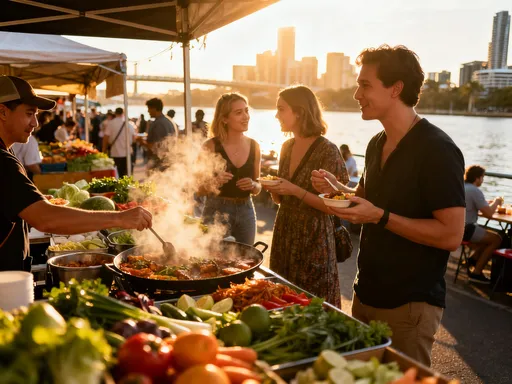
You Won’t Believe This Private Dining Experience in Arusha
Arusha, Tanzania, is more than just a safari gateway—it’s a hidden gem for unforgettable dining. I stumbled upon a private culinary experience that completely changed my view of East African cuisine. Nestled between lush hills and vibrant markets, this intimate meal was personal, flavorful, and deeply authentic. If you think Tanzanian food is just ugali and nyama choma, wait until you taste what’s cooking behind closed doors. The warmth of the host, the richness of the spices, and the quiet joy of sharing a meal in a home garden revealed a side of Arusha few travelers ever witness. This wasn’t just dinner—it was a window into a culture, a conversation without words, and a reminder that the heart of travel beats strongest at the table.
The Unexpected Charm of Arusha
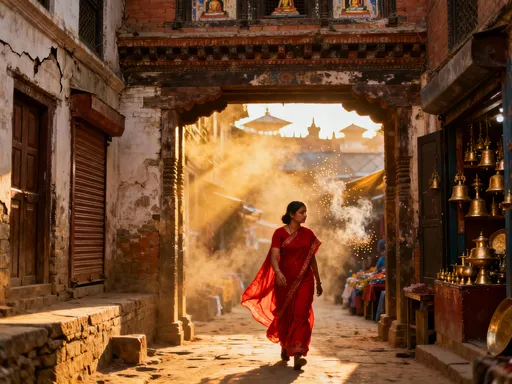
Often dismissed as a mere transit point for safari-goers en route to the Serengeti or Kilimanjaro, Arusha holds a quiet magic that deserves far more than a layover. Situated at the foothills of Mount Meru, the city is cradled by rolling green landscapes, fertile volcanic soil, and a climate that balances warmth with refreshing breezes. Its streets hum with a rhythm all their own—vendors arranging pyramids of ripe mangoes and avocados, women balancing baskets of fresh greens on their heads, and the occasional cow ambling past a café terrace. This is a place where urban life gently blends with rural traditions, where modern guesthouses sit beside family-run chai stalls that have served the same recipe for decades.
What makes Arusha truly special is its cultural mosaic. Home to the Maasai, Meru, and Chaga communities, among others, the city pulses with diverse languages, textiles, and culinary practices. While many tourists rush through to catch flights or board safari trucks, those who pause discover a destination rich with soul. The central market, bustling with color and scent, offers a sensory preview of the region’s gastronomic depth—fresh turmeric, cardamom, and cloves spill from burlap sacks, while smoked fish and dried legumes line wooden stalls. It’s here, amid the chatter and clatter, that one begins to sense the culinary heartbeat of the region.
Yet, Arusha’s charm isn’t just in what you see, but in how it makes you feel. There’s a gentleness in the pace, a willingness in the people to engage, to explain, to invite. It’s a city that doesn’t demand attention but rewards those who give it. And nowhere is this more evident than in the growing movement of private, home-based dining experiences—intimate gatherings where food becomes both offering and conversation. These moments, often tucked away in residential neighborhoods or quiet gardens, are redefining what it means to truly taste a place.
Why Private Dining Is Gaining Ground in Travel Culture
In recent years, travelers have shifted away from standardized restaurant tours toward more personalized, immersive experiences. The desire to connect—authentically and meaningfully—with local cultures has fueled a global rise in private dining opportunities. No longer satisfied with generic menus designed for tourist palates, people are seeking meals that reflect real life, real stories, and real ingredients. This trend is not about exclusivity for luxury’s sake, but about intimacy, respect, and the simple act of breaking bread with someone who calls a place home.
Private dining, in this context, means more than just reserving a secluded table. It refers to curated meals hosted in homes, courtyards, or community spaces—often prepared by local cooks who open their doors to curious guests. These gatherings are not performances; they are invitations. The host may be a grandmother sharing a family recipe passed down for generations, or a young entrepreneur revitalizing traditional dishes with modern touches. What unites them is a commitment to hospitality and cultural exchange.
The emotional resonance of such experiences cannot be overstated. Sitting across from a host who serves you a dish they learned to make as a child creates an immediate bond. You’re not just consuming food—you’re receiving a piece of someone’s history. The conversation flows naturally, sparked by curiosity about ingredients, cooking techniques, or daily life. In a world where travel can sometimes feel transactional, private dining restores a sense of human connection. It reminds us that food is not just fuel, but a language of care, identity, and belonging.
This shift reflects a broader evolution in travel values. Today’s discerning travelers—especially women between 30 and 55 who often plan family trips and value meaningful experiences—prioritize depth over checklist tourism. They seek moments that linger: a shared laugh over a spicy stew, a lesson in grinding spices by hand, or the quiet satisfaction of eating under a starlit sky. Private dining delivers precisely that—a pause in the journey where presence matters more than pace.
How I Found This Secret Experience
Finding this extraordinary meal began with a simple conversation. After spending a morning exploring Arusha’s central market with a local guide, I mentioned my curiosity about home cooking. “Most visitors never see how we eat at home,” he said, smiling. “But if you’d like, I can introduce you to someone.” Within hours, I was exchanging messages with a woman named Neema, a culinary educator who hosts private dinners to share Meru traditions with travelers. Her profile on a community-based tourism platform showed photos of garden tables set with handmade pottery and dishes I didn’t recognize—deep red stews, golden flatbreads, and leafy greens simmered with coconut.
There was a moment of hesitation. Inviting myself into someone’s home, even as a guest, felt vulnerable. Would I be an intrusion? Would I misunderstand customs? But Neema’s message was warm and clear: “Come as you are. We cook, we eat, we talk. No performance, just real food and real people.” That reassurance, paired with the promise of learning something new, made saying “yes” easy.
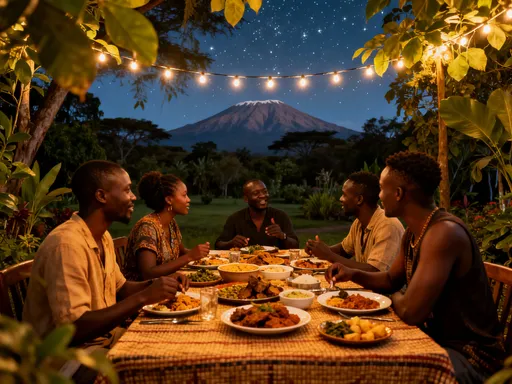
The evening arrived with a soft golden light. I followed a narrow path off a quiet residential street, guided by the scent of roasting cumin and woodsmoke. The garden gate opened to reveal a courtyard transformed—a long wooden table draped in hand-dyed kanga fabric, string lights glowing above, and the faint sound of acoustic guitar in the background. Neema greeted me with a hug and a cup of spiced hibiscus tea. Around us, other guests—two from Germany, one from Canada—were already exchanging stories. The air was warm, the mood relaxed. This wasn’t a show. It was a gathering.
Stepping Into the Setting: More Than Just a Meal
The space itself was a character in the evening. Neema’s family compound, passed down through generations, had been thoughtfully adapted for these gatherings. The dining area was a covered outdoor courtyard, surrounded by banana trees and flowering hibiscus. Lanterns hung from low branches, casting a soft glow over hand-carved stools and woven placemats. Each table setting included a small bowl of rosewater for hand cleansing—a gesture of care that immediately put guests at ease.
What stood out most was the intentionality behind every detail. The plates were locally fired clay, each slightly unique in shape and glaze. Napkins were made from repurposed kitenge fabric, stitched by Neema’s sister. A basket in the center held fresh bread wrapped in banana leaves, still warm from the oven. There were no menus, no printed descriptions—just the promise that each dish would be introduced by Neema herself, with stories about its origins and meaning.
The atmosphere balanced elegance with earthiness. This wasn’t fine dining in the conventional sense, but it was deeply refined in its authenticity. There were no loudspeakers or flashy presentations—just the crackle of the open fire where plantains were roasting, the murmur of Swahili between Neema and her niece who helped serve, and the occasional burst of laughter from the guests. The setting invited slowness, presence, and gratitude. It felt, in the best way, like being welcomed into a family ritual rather than attending a commercial event.
As the sun dipped behind Mount Meru, the sky turned deep indigo, and the stars began to appear. Someone started humming a traditional melody, and Neema joined in, her voice soft but sure. In that moment, the boundaries between guest and host, traveler and local, softened. We were all just people, gathered around food, under the same sky.
The Menu That Told a Story
The meal unfolded like a narrative, each course revealing a new chapter of Meru and coastal Swahili culinary traditions. Neema began with a dish called mchicha wa nazi—tender amaranth greens slow-cooked in coconut milk, garlic, and a touch of chili. “This is what we eat when we want to feel strong,” she said, smiling. “My mother made it for us after long days in the fields.” The flavor was rich and creamy, with a subtle heat that built slowly. Served with steamed mahindi (corn), it was comfort elevated to art.
The next course was a revelation: nyama na tangawizi, beef stew simmered for hours with fresh ginger, tamarind, and a blend of cloves, cinnamon, and black pepper. The meat fell apart at the touch of a fork, infused with a deep, warm spice that was complex but never overwhelming. “Ginger is our healer,” Neema explained. “We use it for colds, for digestion, for energy. My grandmother said it keeps the blood warm.” Beside it, a mound of ugali—the staple maize porridge—was perfectly firm, ideal for scooping up the stew.
But the most surprising dish was viazi viruvi—roasted plantains caramelized in brown sugar and lime zest, then finished with a sprinkle of crushed peanuts. Served warm, they were both sweet and savory, with a smoky depth from the wood fire. “This is a special occasion food,” Neema said. “We eat it during harvest festivals, when we give thanks for the earth’s gifts.” Each bite felt like a celebration.
Dessert was simple but profound: ripe mango slices drizzled with honey and a sprinkle of cardamom, accompanied by a small cup of chai ya kahawa, a spiced coffee-tea blend unique to the region. As we ate, Neema shared how her grandmother taught her to cook using only what the land provided. “No supermarkets, no recipes written down. Just memory, and love, and the seasons.” The meal wasn’t just nourishing—it was educational, emotional, and deeply grounding.
Connecting Through Food: A Moment of Shared Humanity
As the plates were cleared and tea poured, the conversation deepened. One guest asked Neema about her children, and she spoke proudly of her daughter studying nutrition in Dar es Salaam. Another inquired about daily life in Arusha, and Neema described her morning routine—fetching water, tending the kitchen garden, teaching cooking classes to local women. There was no performance, no curated narrative. Just honest, unhurried exchange.
What emerged was not a portrait of “exotic” difference, but of shared values—family, hard work, resilience, and joy in simple pleasures. When I mentioned how much I admired her ability to cook over an open fire, she laughed. “You’d be surprised how fast you learn when you have five hungry mouths to feed!” The table erupted in laughter, a universal sound that needed no translation.
Food, in that moment, became the bridge. It wasn’t about the spices or the techniques, though those were remarkable. It was about the act of sharing—of offering something made with care and receiving it with gratitude. Neema didn’t speak of poverty or struggle, nor did she romanticize rural life. She spoke of pride, of tradition, of the quiet dignity in feeding others well. And in doing so, she invited us not to pity or admire from afar, but to connect as equals.
One of the German guests later told me, “I’ve been on safaris, climbed mountains, seen wildlife up close. But this—this meal, this conversation—is what I’ll remember most.” It was a sentiment echoed around the table. Because while landscapes inspire awe, it is human connection that transforms us. And that transformation begins, often, with a single shared plate.
How to Find Your Own Private Dining Experience in Arusha
For travelers eager to replicate this kind of experience, the good news is that opportunities are growing—but they require intention and respect. The best way to begin is through trusted local guides or community-based tourism initiatives, which often partner with home cooks and cultural educators. Many eco-lodges and guesthouses in Arusha now offer curated dining experiences as part of their guest programs, connecting visitors with hosts in nearby villages or residential neighborhoods.
It’s important to approach these experiences with humility. This is not entertainment; it is hospitality. Always confirm pricing in advance—fair compensation ensures that hosts are valued, not exploited. A typical private dinner in Arusha ranges from $35 to $60 per person, depending on the menu and group size, and often includes transportation from your accommodation.
Researching in advance helps, but staying open to spontaneity can lead to the most memorable moments. Platforms like Fair Tourism Tanzania or local Facebook groups such as “Arusha Food Lovers” often list upcoming events. Alternatively, simply asking at your guesthouse, “Do you know someone who hosts home dinners for visitors?” can yield surprising results. Many experiences are word-of-mouth, shared by travelers who were touched by the warmth and authenticity they found.
When you’re invited, say yes. Arrive with curiosity, not expectations. Dress modestly, bring a small gift if you wish—a packet of tea, a notebook, something simple and thoughtful. Be present. Ask questions, but also listen. And above all, express gratitude—not just with words, but with the way you engage. These moments are not transactions; they are exchanges of trust and kindness.
Conclusion: Rethinking How We Taste a Place
That evening in Arusha changed the way I think about travel. It reminded me that the most powerful experiences are often the quietest—the ones that don’t make it onto postcards or Instagram feeds. A private meal in a backyard garden, shared with strangers who become temporary kin, can leave a deeper imprint than any landmark or safari sighting.
In a world that often moves too fast, private dining invites us to slow down, to savor, to listen. It challenges us to look beyond the obvious attractions and seek the heart of a place—often found in a kitchen, around a table, in the hands of someone who cooks not for show, but for love. For women who travel—not just as tourists, but as mothers, daughters, friends, and seekers—these moments offer a rare kind of nourishment: one that feeds both body and spirit.
Arusha taught me that to taste a culture is to understand it in layers—the soil, the seasons, the stories, the hands that prepare the food. It is to recognize that every meal carries a history, and every host offers a gift. So the next time you plan a trip, don’t just pack your camera and itinerary. Pack your openness. Pack your willingness to be surprised. And above all, pack your appetite—not just for food, but for connection. Because the world’s most unforgettable flavors are served one plate at a time, in the quiet spaces where hospitality begins.