This Is What Happens When You Drive Through Bhutan’s Hidden Valleys
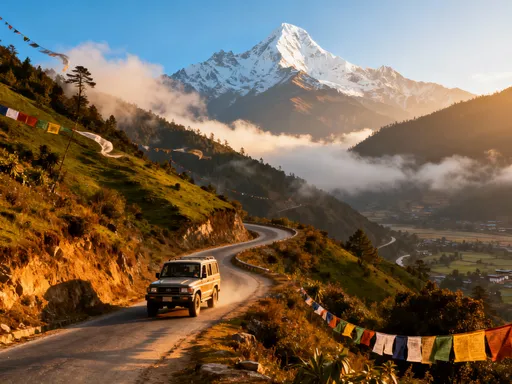
Driving through Paro, Bhutan, feels like slipping into another world—where mist curls over emerald hills and ancient trails whisper secrets. I didn’t expect the raw beauty to hit so hard. Every turn revealed untouched landscapes, remote villages, and a silence so deep it changes you. This journey wasn’t just about reaching destinations—it was about what the road taught me. If you crave nature in its purest form, this is your sign. In a world increasingly shaped by speed and noise, Bhutan remains a sanctuary of balance, where mountains still touch the sky and time moves to the rhythm of prayer wheels. Driving through its hidden valleys offers more than a scenic route—it invites a reconnection with stillness, with self, and with the quiet majesty of the natural world.
Why Paro? The Allure of Bhutan’s Western Gateway
Paro Valley, nestled in the western foothills of the Himalayas, serves as one of Bhutan’s most treasured gateways—not only because it houses the kingdom’s only international airport but because it encapsulates the essence of Bhutanese beauty and tradition. Unlike more commercialized mountain destinations across Asia, Paro has preserved its ecological integrity and cultural authenticity with deliberate care. The valley is cradled by dense forests of pine, fir, and rhododendron, which bloom in vibrant splashes of crimson and pink each spring, transforming the hillsides into living paintings. This region is part of a biodiversity hotspot, home to rare species such as the red panda, Himalayan black bear, and numerous endemic bird populations, making it a quiet haven for nature lovers and conservation-minded travelers alike.
What sets Paro apart from other Himalayan destinations is not just its visual grandeur but its cultural continuity. The valley is dotted with dzongs—fortified monasteries that serve as both religious and administrative centers—many of which date back centuries. Paro Dzong, also known as Rinpung Dzong, perches dramatically above the Paro River, connected to the town by a traditional covered bridge. This harmonious blend of spiritual presence and natural splendor creates an atmosphere of reverence that permeates the landscape. Visitors often speak of an immediate sense of calm upon arrival, a feeling attributed not only to the region’s famously clean air but also to the mindful way of life practiced by its people.
For travelers seeking immersion over spectacle, self-driving through Paro offers an unmatched advantage. While guided tours provide safety and structure, driving allows for personal rhythm—a pause at a riverside shrine, an unplanned stop to watch farmers tending terraced fields, or a quiet moment beneath fluttering prayer flags. The freedom to explore at one’s own pace fosters a deeper connection to place, enabling experiences that feel authentic rather than curated. Moreover, Paro’s compact size and relatively developed infrastructure make it one of the few regions in Bhutan where independent travel, including self-driving with proper permits, is both feasible and enriching.
Behind the Wheel: Freedom and Challenges of Self-Driving in Bhutan
Driving in Bhutan is not for the faint of heart. The roads, carved into steep mountain slopes, are narrow, winding, and often lack guardrails. What appears as a simple route on a map can unfold into hours of cautious navigation, with blind curves, sudden fog, and the occasional rockslide requiring constant vigilance. Yet, for those prepared, the challenges are part of the reward. Self-driving in Paro offers a rare sense of autonomy in a country where tourism is typically managed through guided packages. With the right preparation, it becomes a journey of both outer exploration and inner resilience.
Vehicle choice is critical. A four-wheel-drive SUV is strongly recommended, especially when venturing beyond the main Paro-Thimphu highway toward more remote trails and high-altitude passes. These vehicles handle rough terrain, sudden weather changes, and unpaved access roads with greater stability. Most rental agencies in Paro provide well-maintained Jeeps or similar models, often with GPS devices and basic roadside assistance. However, tourists must secure a special driving permit in addition to the standard tourist visa, and international driving licenses are required. It is also customary—and wise—to hire a local driver if unfamiliar with mountain driving, though experienced drivers may opt to take the wheel themselves with proper authorization.
Local driving etiquette emphasizes patience and respect. Bhutanese drivers move at a measured pace, often slowing for livestock, pedestrians, or monks walking along the roadside. Honking is rare and considered impolite, especially near religious sites. Drivers are expected to yield to oncoming traffic when the road narrows, and it’s common to see vehicles pull over to allow others to pass on particularly tight stretches. This culture of mutual consideration reflects the broader national philosophy of Gross National Happiness, where well-being and harmony take precedence over speed or convenience. For visitors, adapting to this rhythm is not just practical—it’s part of the journey’s deeper lesson in mindfulness and presence.
The Road Unfolds: Scenic Routes That Define the Journey
The drive from Paro to Dochula Pass is often the first breathtaking chapter in any self-guided journey through western Bhutan. Spanning just over 30 kilometers, this route climbs steadily through pine forests and terraced farmland, each curve revealing a new perspective on the valley below. As elevation increases, the air grows cooler and clearer, and on a good day, the panoramic view from Dochula offers a sweeping vista of the Himalayan range, with snow-capped peaks glowing in the sunlight. The pass itself is adorned with 108 chortens—white stupas built in memory of Bhutanese soldiers—which stand in serene alignment, their prayer flags fluttering like ribbons in the wind.
From Dochula, the road continues toward the base of Mount Jomolhari, one of Bhutan’s most sacred peaks. The ascent to the Chomolhari Base Camp trailhead is not for casual drivers; it demands careful navigation through high-altitude terrain where weather can shift in minutes. Yet the rewards are profound. Alpine meadows stretch between rocky outcrops, dotted with edelweiss and gentians in summer. Glacial streams cut through the landscape, their waters so pure they can be safely sipped with minimal filtration. Along the way, ancient stone cairns mark the paths used by herders and pilgrims for generations, reminding travelers that they are moving through a landscape shaped by both nature and tradition.
Descending into quieter valleys—such as the route toward Gunitsawa or the upper reaches of the Paro Chhu River—reveals a different side of Bhutan’s beauty. These areas are sparsely populated, with only occasional farmhouses and small temples breaking the solitude. The road may narrow to a single lane, flanked by wildflowers in spring and golden larch trees in autumn. Here, the absence of crowds allows for a rare kind of stillness, where the only sounds are the rustle of leaves, the murmur of water, and the distant chime of yak bells. It is in these moments that the true magic of self-driving becomes apparent: the ability to stop, breathe, and simply be present in a place untouched by haste.
Nature’s Masterpieces: Iconic Landscapes Seen from the Driver’s Seat
No journey through Paro is complete without encountering the Tiger’s Nest Monastery—Taktsang Palphug, perched 900 meters above the valley floor on a sheer cliff face. While most visitors hike the steep trail to reach it, those driving through the region can pause at designated viewpoints along the road to witness this architectural marvel in its full glory. From below, the monastery appears to grow from the rock itself, its golden roofs catching the morning light. Prayer flags cascade down the cliffside like streams of color, carrying blessings into the wind. Seeing it from the driver’s seat—without the fatigue of the climb—allows for quiet contemplation, a moment to absorb not just the visual spectacle but the spiritual significance of a site believed to be where Guru Rinpoche, the father of Bhutanese Buddhism, meditated in the 8th century.
Equally awe-inspiring is the view of Jomolhari, the 7,314-meter peak that dominates the northern skyline. Known as the “Mountain of God,” it remains snow-covered year-round and is visible from several points along the Paro-Thimphu highway, especially in the early morning when the air is clearest. On clear days, its symmetrical cone rises like a sentinel above the clouds, casting long shadows across the valleys. Local legends say the mountain is the home of a protective goddess, and many travelers report a sense of reverence upon seeing it—something beyond mere admiration for its beauty. Self-driving allows for spontaneous stops at high vantage points, where one can sit in silence and let the mountain’s presence settle into the soul.
The Paro Valley itself is a masterpiece of seasonal transformation. In spring, fields of rapeseed flowers turn the landscape into a patchwork of gold and green, while orchards burst into bloom with apple, apricot, and cherry blossoms. In autumn, the forests ignite in hues of amber and crimson, and the air carries the crisp scent of fallen leaves. Driving through these changing seasons offers a living calendar of nature’s cycles, each phase distinct and deeply felt. The ability to pause, photograph, or simply watch a farmer plowing a field with oxen—unchanged for centuries—connects the traveler to a rhythm of life that feels increasingly rare in the modern world.
Beyond the Beaten Path: Discovering Hidden Natural Spots
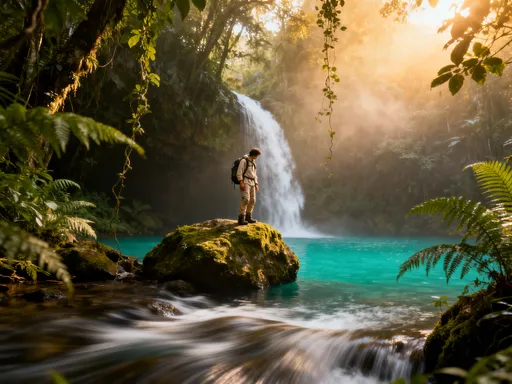
One of the greatest gifts of self-driving in Paro is the freedom to discover places that lie just beyond the reach of organized tours. Alpine meadows near Gunitsawa, accessible via a rough but navigable track, offer wide-open spaces where yaks graze and marmots dart between rocks. These high-altitude fields are especially beautiful in late summer, when wildflowers bloom in profusion and the air hums with the sound of bees and birdsong. Stopping here—while respecting local guidelines not to disturb grazing land or sacred sites—allows for quiet picnics, meditation, or simply lying back to watch clouds drift across the vast sky.
Along the Paro Chhu River, quieter banks away from the main roads provide peaceful retreats. These spots are often known only to locals—small clearings where families gather on weekends or where monks come to meditate. Travelers who stop here should do so with humility, leaving no trace and avoiding loud noises or intrusive behavior. A respectful presence is rewarded with moments of profound peace: the sound of water over stones, the reflection of snow peaks in the river, the sight of a kingfisher diving for prey. These are not destinations to check off a list but experiences to be absorbed slowly, like tea steeped in silence.
Another hidden gem lies above the ruins of Drugyel Dzong, once a fortress guarding the northern approaches to Paro. The site itself is partially restored, but the surrounding area offers sweeping views of the valley and access to seasonal wildflower fields that bloom in mid-spring. The road up is steep and unpaved, but the solitude and beauty make it worth the effort. From this elevation, the entire Paro Valley unfolds like a map, with terraced fields, winding rivers, and distant villages laid out in quiet harmony. It is a view that invites reflection—not just on the landscape, but on one’s place within it.
Practical Wisdom: Planning Your Self-Drive Adventure Responsibly
Timing is everything when planning a self-drive journey through Paro. The best seasons are spring (March to May) and autumn (September to November), when the weather is stable, visibility is high, and the landscapes are at their most vibrant. Summer brings monsoon rains that can trigger landslides and reduce road safety, while winter, though beautiful, can bring snow and ice to higher passes, making travel difficult without specialized equipment. Travelers should monitor weather forecasts closely and avoid driving during or immediately after heavy rain.
Fuel availability is limited outside major towns, so it’s wise to fill the tank whenever possible. Paro and Thimphu have reliable petrol stations, but remote areas do not. Carrying extra water, non-perishable food, and a basic emergency kit—including a flashlight, first-aid supplies, and warm clothing—is essential, as mobile network coverage can be spotty. Offline maps, downloaded via apps like Maps.me or Google Maps, are invaluable for navigation, especially when GPS signals weaken in deep valleys.
Working with a reputable local rental agency ensures access to well-maintained vehicles and accurate information about road conditions. Many agencies offer packages that include permits, insurance, and even local driving guides for those who want support without fully relinquishing control. Environmental responsibility is paramount: travelers should avoid littering, stick to established roads, and refrain from picking plants or disturbing wildlife. Cultural sensitivity is equally important—when stopping in villages, it’s courteous to ask before photographing people or religious sites and to dress modestly out of respect for local customs.
The Deeper Journey: How the Landscape Changes You
More than any photograph or souvenir, the lasting gift of driving through Bhutan’s hidden valleys is the transformation it brings to the traveler. Hours spent on winding mountain roads, surrounded by silence and grandeur, create space for introspection. Without the distractions of daily life, the mind begins to settle. Thoughts slow. Breathing deepens. A sense of presence emerges—not as a goal, but as a natural byproduct of moving through a landscape that demands attention and humility.
Many who travel through Paro speak of a shift in perspective—a softening of urgency, a renewed appreciation for simplicity. The sight of a monk walking barefoot along a dusty road, the sound of bells from a distant temple, the sight of a family sharing a meal outside their home—these moments, witnessed from the quiet of a parked car, carry a weight that transcends tourism. They remind us of what it means to live with intention, to move through the world with respect, and to find beauty in stillness.
Paro, in this sense, is not merely a destination. It is an invitation—to slow down, to listen, to see. Driving through its valleys is not about conquering terrain but about surrendering to it. It is about allowing the mountains to teach patience, the rivers to model flow, and the silence to reveal what has been buried beneath noise. For the women who make homes, who nurture families, who carry the unseen labor of daily life, this journey offers a rare gift: time. Time to breathe. Time to remember oneself. Time to be changed by beauty so pure it feels like truth.
If you are ready to step away from the expected, to trade schedules for spontaneity and noise for silence, then let Paro be your next journey. Not as a spectator, but as a participant in a landscape that still breathes, still sings, still holds space for the soul. Take the wheel. Follow the road. And let Bhutan’s hidden valleys show you not just the world as it is—but as it could be.