You Won’t Believe What I Found in Shiraz — Art, Soul, and Hidden Treasures
Shiraz, Iran, isn’t just about poetry and gardens — it’s a living canvas. I went looking for beauty and stumbled upon something deeper: art woven into everyday life. From intricate handicrafts to vibrant bazaars bursting with color, every corner tells a story. The specialty products here aren’t just souvenirs — they’re heirlooms of culture, shaped by generations. What makes Shiraz truly special? It’s where tradition dances with creativity, and finding its treasures feels like uncovering secrets whispered through time.
First Impressions: Shiraz as a City of Sensory Art
From the moment one steps into Shiraz, the city reveals itself not as a mere collection of streets and buildings, but as a carefully composed symphony of senses. The air carries the delicate perfume of blooming jasmine, especially in the early mornings when the narrow alleys of the old quarter are still bathed in soft, golden light. Birds sing from behind latticed windows, and the faint chime of copper bowls echoes from tucked-away workshops. This is not a city that shouts — it whispers, inviting visitors to lean in and listen closely.
Architectural harmony defines Shiraz’s visual language. Mosques adorned with turquoise mosaics rise beside homes whose courtyards overflow with citrus trees and fountains. The tile work, often featuring geometric patterns and floral motifs, reflects centuries of Persian design philosophy — one rooted in balance, symmetry, and reverence for nature. Even the sidewalks seem deliberate, paved with stones laid in repeating patterns that echo the rhythms of traditional Persian music.
What stands out most is how art is not confined to galleries or museums. It spills into the streets, lives in doorways, and dances across rooftops. A simple street vendor’s cart might be painted with miniature scenes from ancient epics. A tea house wall could be covered in hand-painted verses by Hafez, each letter flowing like water. This integration of art into daily existence creates an atmosphere where beauty feels accessible, even sacred. Shiraz does not separate the practical from the poetic — it fuses them seamlessly.
For the traveler, this sensory richness transforms the experience of sightseeing into something more profound: a slow unfolding of cultural depth. Every detail, from the curve of an arched doorway to the calligraphy etched into a tombstone, suggests intention and care. It becomes clear that Shiraz is not simply a destination to visit, but a way of seeing the world — one where craftsmanship, nature, and spiritual reflection coexist in quiet harmony.
The Heartbeat of Craft: Inside Shiraz’s Traditional Workshops
Beneath the city’s poetic reputation lies a pulse of skilled labor — the steady rhythm of artisans shaping heritage with their hands. In small workshops tucked behind bustling alleys, known locally as *karkhanes*, generations of craftsmen preserve techniques that have been passed down for centuries. These are not tourist displays, but working spaces where tradition meets discipline, and where a single object can take weeks, even months, to complete.
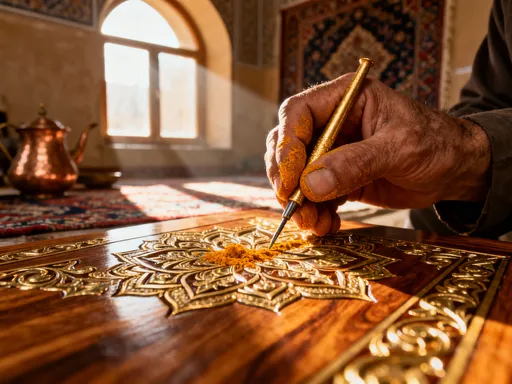
One of the most revered crafts is *khatam-kari*, an intricate form of wood inlay that uses tiny pieces of bone, brass, and hardwood to create dazzling geometric patterns. Artisans sit cross-legged on low stools, assembling each piece like a puzzle, using tweezers and magnifying glasses to place slivers no wider than a thread. The process demands not only technical precision but immense patience. A single box might contain thousands of individual fragments, all fitted by hand without glue, relying solely on pressure and fit. The result is a surface that shimmers under light, revealing new details the longer one looks.
Equally mesmerizing is *golabetoon*, the traditional art of engraving copper and brass. In dimly lit rooms filled with the scent of metal and oil, artisans use small chisels to carve floral and poetic motifs into trays, vases, and teapots. Each strike of the hammer is deliberate, shaping swirling vines and blossoms that seem to grow organically from the surface. These pieces are not merely decorative — they carry symbolic meaning, often referencing paradise, abundance, or divine beauty, themes deeply rooted in Persian culture.
Miniature painting, another living tradition, thrives in private studios where artists spend years mastering the fine brushwork required to depict courtly scenes, mythical creatures, or lyrical landscapes. Using natural pigments and brushes made from squirrel hair, they recreate the delicate style seen in ancient manuscripts. Many of these artists come from families where the craft has been practiced for generations, learning first by copying their elders’ work before developing their own voice.
What unites these artisans is a deep sense of responsibility — not just to their craft, but to the continuity of culture. They speak of their work not as a job, but as a form of devotion. In a world increasingly dominated by mass production, these workshops stand as quiet acts of resistance, preserving a legacy that cannot be replicated by machines. To witness them is to understand that in Shiraz, art is not only seen — it is lived, breathed, and sustained through dedication.
From Market to Masterpiece: Navigating the Vakil Bazaar for Authentic Finds
The Vakil Bazaar, stretching like a labyrinth beneath vaulted brick ceilings, is more than a marketplace — it is a living archive of Persian craftsmanship. Built during the Zand dynasty in the 18th century, its corridors have absorbed centuries of footsteps, conversations, and transactions. Today, it remains one of the best places to encounter authentic specialty products, from handwoven textiles to locally forged metalwork. For the discerning traveler, navigating this historic bazaar offers both discovery and connection.
One of the most sought-after treasures here is the Qashqai rug, handwoven by nomadic tribes from the surrounding regions. Unlike factory-made carpets, each Qashqai piece tells a story through its patterns — geometric shapes representing mountains, animals, or tribal symbols, all dyed with natural pigments from plants and insects. The wool is spun by hand, and the weaving process can take several months. To identify an authentic rug, look for slight irregularities in the pattern — these are not flaws, but signs of human touch. Reputable vendors are often happy to explain the origin of their rugs and may even show photographs of the weavers.
Textile stalls display embroidered tablecloths, cushion covers, and traditional garments, many featuring intricate *suzandozi* (Persian embroidery) using silk thread and metallic accents. These pieces often incorporate floral motifs inspired by Persian gardens, symbolizing beauty and renewal. When selecting such items, examine the density of the stitching — higher thread count usually indicates greater skill and durability. Many vendors offer custom orders, allowing visitors to commission pieces tailored to their taste.
Another highlight is the rosewater and herbal goods section, where small bottles line wooden shelves like jewels. Made from the petals of damask roses grown in nearby Kazeroon, this rosewater is distilled using traditional copper stills and is prized for its purity. Beyond its use in perfumery, it plays a role in cooking, religious ceremonies, and even skincare. Visitors can watch demonstrations of the distillation process in some shops, where steam rises from large kettles in a ritual unchanged for generations.
To engage respectfully with vendors, a few simple practices go a long way. Begin with a polite greeting — a simple “Salam” followed by “Chetorin?” (How are you?) establishes goodwill. Bargaining is expected, but should be done with courtesy, not aggression. A smile, a willingness to listen, and genuine interest in the craft often lead to better prices and richer conversations. Many shopkeepers appreciate when visitors ask about the making process, as it shows respect for their work.
While modern souvenirs are available, the most meaningful finds are those rooted in tradition. A hand-stitched textile, a copper tray with engraved poetry, or a small wooden box with khatam inlay — these are not just mementos, but tangible links to a living culture. The Vakil Bazaar, in all its sensory richness, reminds us that shopping can be an act of cultural appreciation, not just consumption.
The Scented Art of Shiraz: Rosewater, Perfume, and Cultural Identity
In Shiraz, fragrance is not an accessory — it is a language. Among the city’s most cherished specialties is rosewater, a golden-hued essence distilled from the petals of the damask rose. Harvested in late spring, primarily in the nearby town of Kazeroon, this floral elixir carries the soul of Persian tradition. Its production is both an agricultural and artistic endeavor, one that connects land, labor, and legacy in a single aromatic thread.
The distillation process, known as *golabgiri*, follows methods unchanged for centuries. At dawn, farmers gather fresh rose blossoms, their hands stained pink from the petals. These are transported quickly to distilleries, where they are layered into large copper stills with water. As steam rises, it captures the essential oils, which are then cooled and collected. It takes approximately 3,000 kilograms of petals to produce just one liter of pure rosewater, making it a precious and labor-intensive product. The scent is delicate yet enduring — floral, slightly sweet, with a hint of spice.
Rosewater is deeply embedded in daily life. In homes, it is sprinkled on guests’ hands as a gesture of welcome. It flavors desserts like *faloodeh* and *sholeh zard*, adding a floral note that elevates simple dishes into celebrations. During Nowruz, the Persian New Year, rosewater is used in rituals of renewal, symbolizing purity and the arrival of spring. Even in religious observances, it is used to anoint sacred texts or cool the air in prayer rooms, reflecting its role as a bridge between the physical and the spiritual.
Beyond the household, rosewater plays a role in traditional medicine and beauty. Persian healers have long valued its soothing properties, using it to calm the eyes, refresh the skin, and ease digestion. Today, many local skincare brands incorporate it into toners, creams, and soaps, capitalizing on its natural antiseptic and anti-inflammatory qualities. Artisan perfumers also use it as a base for creating complex fragrances, blending it with saffron, amber, or musk to craft scents that evoke the elegance of Persian courts.
What makes rosewater more than just a product is its cultural resonance. It is a sensory emblem of hospitality, refinement, and connection to nature. To carry a bottle home is to carry a piece of Shiraz’s spirit — not in the form of a statue or postcard, but in a scent that lingers on the skin, in the memory, in the heart. In a world of synthetic fragrances, this natural essence stands as a quiet testament to the enduring value of tradition.
Poetry as Living Art: How Hafez and Saadi Shape Local Creativity
If Shiraz has a soul, it speaks in verse. The city is the final resting place of two of Persia’s greatest poets — Hafez and Saadi — whose words continue to shape the cultural fabric of daily life. Their tombs are not merely monuments, but living spaces of reflection, where locals and visitors alike gather to recite poetry, seek guidance, or simply sit in quiet contemplation. In Shiraz, poetry is not confined to books — it is performed, shared, and felt.
Hafez’s Tomb, set within a serene garden of cypress trees and reflecting pools, is especially revered. Every evening, small groups gather on stone benches, holding well-worn copies of the *Divan-e Hafez*. Some read aloud, their voices rising and falling like music. Others use the poems for *fal-e Hafez* (Hafez’s oracle), opening the book at random to seek answers to personal questions. The act is not seen as superstition, but as a form of spiritual conversation with a beloved teacher. His verses, filled with themes of love, doubt, and divine mystery, resonate across generations.
Saadi’s mausoleum, with its elegant turquoise dome, honors a poet whose work emphasizes wisdom, ethics, and human connection. His famous phrase, “Children of Adam are limbs of one body,” is inscribed at the United Nations, but in Shiraz, it is lived. Schoolchildren memorize his fables, and artisans incorporate his words into calligraphy panels and ceramic tiles. His legacy is one of compassion, and it infuses the city’s artistic expression with a moral depth.
Poetry influences visual art as well. Calligraphy, considered one of the highest forms of Islamic art, brings poetic texts to life through flowing script. In shops and homes, one can find verses from Hafez or Saadi rendered in *nasta'liq* script — a style known for its elegance and rhythm. These are not mere decorations; they are meditations, meant to be read slowly, absorbed like tea. Musicians also draw from the poetic tradition, setting classical verses to traditional instruments like the tar and setar, creating performances that feel both ancient and immediate.
Even public spaces reflect this literary heritage. Park benches, fountains, and garden walls often bear engraved lines from the great poets, turning the city into an open-air anthology. For the visitor, this constant presence of poetry creates a unique atmosphere — one of introspection and beauty. It reminds us that art is not only to be admired, but to be lived, to guide how we think, feel, and connect with others. In Shiraz, poetry is not a relic of the past — it is a living, breathing force that shapes the present.
Beyond Souvenirs: Choosing Meaningful Specialty Products
In a world of mass-produced goods, the true value of travel lies in bringing home something that carries meaning. In Shiraz, this means moving beyond generic souvenirs and seeking out pieces that reflect genuine artistry and cultural significance. A thoughtfully chosen item becomes more than an object — it becomes a story, a connection, a piece of heritage.
One of the most meaningful purchases is a hand-painted tile, often decorated with floral patterns or poetic inscriptions. These tiles, made using traditional techniques, can be displayed in the home as a reminder of Shiraz’s architectural beauty. Each one is unique, with slight variations in glaze and brushstroke that reflect the artist’s hand. When selecting a tile, look for even firing, clear colors, and fine detailing — signs of skilled craftsmanship.
Another powerful choice is a bound volume of poetry in Persian script, particularly the works of Hafez or Saadi. Even if one does not read Farsi, the beauty of the calligraphy and the cultural weight of the text make it a treasured possession. Some bookshops offer editions with English translations, allowing readers to engage with the meaning while appreciating the artistry of the original script.
For those drawn to wearable art, a hand-embroidered scarf or shawl offers both beauty and utility. Made from silk or fine cotton, these textiles often feature motifs inspired by Persian gardens or miniature paintings. They can be worn on special occasions or draped over a chair as a decorative accent. When purchasing, check for tight, even stitching and natural dyes, which ensure longevity and authenticity.
It is also important to consider ethics. Buying directly from artisans or cooperatives ensures that creators are fairly compensated. Avoid items made with synthetic materials or machine replication disguised as handmade. Ask questions — where was this made? Who made it? How long did it take? These conversations not only help verify authenticity but also deepen appreciation.
Ultimately, the most valuable souvenirs are those that invite continued engagement. A copper tray engraved with poetry may inspire one to learn about Persian literature. A bottle of rosewater might lead to exploring traditional recipes. These objects are not endpoints — they are starting points for a deeper relationship with a culture. By choosing mindfully, travelers honor the artistry they encounter and help sustain traditions for future generations.
Carrying Shiraz Home: Preserving the Artistic Spirit
The journey to Shiraz does not end when the plane takes off. The city’s artistic spirit can continue to unfold long after the return home, not as a memory fading with time, but as a living influence. The treasures collected — whether a handcrafted box, a poem, or the scent of rosewater — become vessels for that spirit, inviting daily reconnection.
Displaying these items thoughtfully can transform a home into a space of reflection. A miniature painting hung in a quiet corner becomes a focal point for mindfulness. A copper tray placed on a coffee table sparks conversation and curiosity. Even a small bottle of rosewater, used to scent a room or flavor a dessert, brings a sensory echo of Shiraz into everyday rituals. These are not mere decorations — they are invitations to pause, to appreciate, to remember.
Some travelers go further, seeking to learn the crafts they encountered. Online workshops now offer lessons in Persian calligraphy, miniature painting, or even basic khatam-kari techniques. While mastery takes years, even beginner attempts foster deeper respect for the skill involved. Others host small gatherings, serving Persian tea and sweets while sharing stories from their journey, turning personal experience into shared cultural appreciation.
For families, these experiences can become intergenerational. Children who helped choose a handmade rug or listened to a poem at Hafez’s Tomb may grow up with a broader understanding of beauty and heritage. Passing down a cherished object, along with the story behind it, becomes a quiet act of cultural stewardship.
In essence, Shiraz offers more than a vacation — it offers a perspective. It teaches that art is not separate from life, but woven into it. That beauty can be found in a tile, a scent, a verse. That tradition is not static, but alive, evolving through those who value it. To carry Shiraz home is not just to remember a place, but to embrace a way of seeing — one where every day holds the potential for creativity, connection, and quiet wonder.